Skin Clinic vs Beauty Salon: What's the Real Difference?

In Malaysia’s crowded aesthetic market, the line between a skin clinic and a beauty salon is increasingly blurred — at least in how these businesses present themselves. Both may offer facials. Both may advertise laser treatments. Both may use clinical-looking decor and white-coated staff. But beneath the surface, the differences are significant, and they matter enormously for your safety and your results.
Da Vinci Clinic is a medical skin clinic. This article explains clearly what that means, how it differs from a beauty salon, and why the distinction matters for every treatment you consider.
This article is a transparent guide to who should avoid HIFU treatment, what the actual risks are, and how Da Vinci Clinic determines candidacy.
Qualifications: The Most Important Difference
The single most important difference between a skin clinic and a beauty salon is who is performing your treatment and what qualifications they hold.
At a Medical Skin Clinic
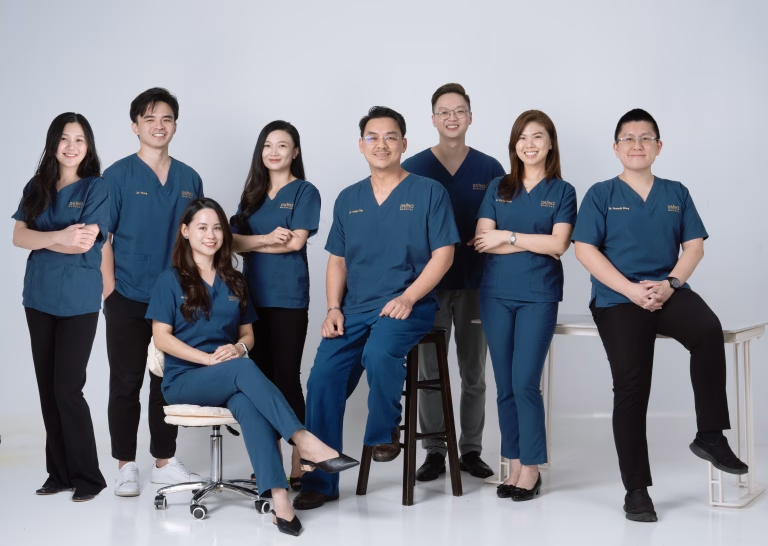
Treatments are performed by or under the direct supervision of licensed medical doctors. In Malaysia, aesthetic practitioners performing laser treatments, injectables, and energy-based procedures are required to hold an LCP (Letter of Credentialing and Privileging) from the Ministry of Health. Da Vinci Clinic’s entire clinical team holds LCP certification — every treatment is performed by a qualified, registered doctor.
At a Beauty Salon
Treatments are typically performed by beauty therapists who hold diplomas or certificates in beauty therapy — not medical qualifications. Beauty therapists are trained for skincare and non-medical aesthetic services. They are not qualified to diagnose skin conditions, perform medical-grade laser treatments, administer injectables, or manage the complications that can arise from these procedures.
The problem is not beauty salons per se — they are entirely appropriate for services within their scope. The problem is when beauty salons offer or perform services that legally and safely require medical qualifications. This happens in Malaysia more commonly than most people realise.
At Da Vinci Clinic, every treatment is performed by LCP-certified doctors. Learn more about our team and credentials on our About Us page.
Treatments: What Each Can Legitimately Offer
Beauty Salon — Appropriate Scope
Basic facials, manual extractions, waxing, threading, basic microdermabrasion, non-medical grade chemical peels, and massage. These services do not require medical qualifications and are safely within a trained beauty therapist’s scope of practice.
Skin Clinic — Medical-Grade Treatments
Medical-grade laser treatments (pico laser, CO2 laser, ND:YAG), dermal fillers and botulinum toxin injectables, HIFU and radiofrequency energy-based treatments, medical-grade chemical peels, prescription skincare, and advanced skin condition management. These require medical qualifications and carry risks that require clinical training to manage.
Da Vinci Clinic’s full treatment range — covering pigmentation, laxity, volume, acne, and skin quality — is available on our treatments and services page.
Devices: Genuine vs Unverified Equipment
Medical-grade laser and energy devices require calibration, maintenance, and operator training to function safely and effectively. Genuine branded devices come with certificates of authenticity from the manufacturer. A concerning number of beauty salons in Malaysia operate unverified or counterfeit devices that mimic the appearance of genuine machines but cannot guarantee consistent energy delivery or safety.
Da Vinci Clinic holds certificates of authenticity for every device we operate, including Ultherapy Prime, Thermage, Cynosure PicoSure Pro, and Fotona. These are available for patient review at our clinics.
Our signature treatments use certified, genuine technology — and our doctors are specifically trained and credentialed for each device in our clinic.
Frequently Asked Questions (FAQs)
In Malaysia, the use of Class 3B and Class 4 laser devices — which includes medical-grade lasers used for pigmentation, tattoo removal, and skin resurfacing — is regulated and should be performed only by qualified medical practitioners. Beauty salons that offer laser treatments should be asked to confirm the qualifications of the person operating the device.
Dermal fillers are injectable procedures that carry serious risks, including vascular occlusion (blockage of a blood vessel), if performed incorrectly. These risks require medical training to recognise and manage. Da Vinci Clinic strongly advises against receiving filler injections from non-medical practitioners regardless of price or promotional offers.
Check that the clinic’s doctors are registered with the Malaysian Medical Council (MMC) and hold LCP certification for aesthetic procedures. Ask to see device authenticity certificates. Look for transparent consultation practices and evidence of actual doctor involvement in treatments rather than delegation to non-medical staff.
The aesthetic market in Malaysia is competitive and regulation is not uniformly enforced. Some beauty salons offer medical-grade sounding services without proper qualifications because demand exists and detection risk is low. Patient awareness is one of the most effective defences against this practice.
Yes. Da Vinci Clinic offers medical-grade facials that go significantly beyond what beauty salon facials provide — using prescription-grade products, clinical assessment of skin condition, and doctor-supervised protocols. Our facial programmes are designed as part of a broader skin health management plan, not as standalone pampering sessions.
Conclusion
The difference between a skin clinic and a beauty salon is not cosmetic — it is a matter of qualifications, safety, and results. When the treatment you are considering involves lasers, injectables, or energy-based devices, the choice of a doctor-led medical clinic is not optional. Da Vinci Clinic is where Malaysian patients come when they want treatments performed safely and correctly. Book your skin consultation today. For guidance on aesthetic practice regulation in Malaysia, the Malaysian Medical Council is the authoritative regulatory body.