
Stem Cell Therapy for Skin Rejuvenation and Regenerative Aesthetic Care

Stem cell therapy is an advanced regenerative treatment that supports the body’s natural ability to repair, renew and restore healthier tissue. In aesthetic medicine, it is commonly discussed for skin rejuvenation, collagen stimulation, hair and scalp support, scar improvement and overall anti-ageing care.
Unlike conventional treatments that focus only on surface-level correction, stem cell therapy works by encouraging cellular repair and regeneration. Depending on the treatment plan, this may involve autologous materials from the patient’s own body, PRP-supported regenerative protocols, or doctor-selected regenerative solutions.
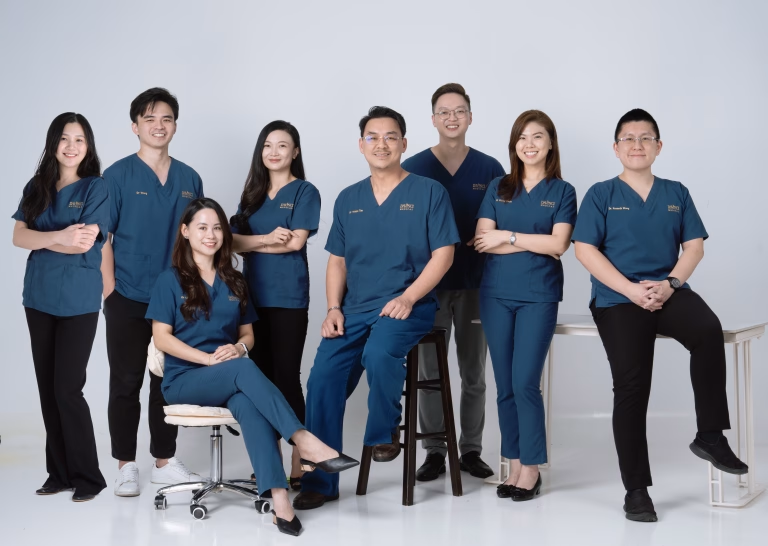
At Da Vinci Clinic, regenerative aesthetic care is planned through a doctor-led approach. This is important because not every patient needs the same treatment. Skin condition, age, hair concerns, medical history and aesthetic goals should all be assessed before deciding whether stem cell therapy, PRP, microneedling or another treatment is more suitable.
What Is Stem Cell Therapy in Aesthetic Medicine?
Stem cell therapy focuses on improving the body’s repair environment. In aesthetic treatments, the goal is usually to support collagen production, improve skin texture, enhance healing and restore a healthier-looking appearance.
In the skin, collagen and elastin are important proteins that help maintain firmness, elasticity and smoothness. As we age, collagen production slows down. This may lead to fine lines, wrinkles, rough texture, dullness, enlarged pores and mild sagging. Regenerative aesthetic treatments aim to stimulate the skin’s natural renewal process so the result appears gradual and natural.
Stem cell therapy may support:
- Skin rejuvenation and anti-ageing care
- Collagen and elastin production
- Hair and scalp health
- Scar and acne scar improvement
- Skin repair after damage or ageing
Patients who want to understand the full range of available treatments can explore Da Vinci Clinic’s service page for more information on their aesthetic and regenerative options.
Stem Cell Therapy for Skin Rejuvenation
Stem cell therapy for skin rejuvenation is often used to improve skin quality rather than simply add volume or change facial structure. The treatment may involve regenerative cells, growth factors, exosomes, secretomes or other doctor-selected solutions that help encourage skin repair.
The main aim is to activate fibroblast activity. Fibroblasts are cells that help produce collagen and elastin. When fibroblast activity improves, the skin may gradually appear firmer, smoother and more refreshed.
Stem cell therapy may be considered for concerns such as:
- -Fine lines and early wrinkles Fine lines and early wrinkles
- -Dull or tired-looking skin
- -Uneven skin texture
- -Mild skin laxity
- -Loss of firmness
- -Reduced skin glow
This type of treatment is usually not an instant lifting procedure. Some patients may notice early hydration, glow or freshness, but collagen-related improvement normally develops over time. More visible changes may appear after several weeks to a few months, depending on the patient’s skin condition and treatment response.
For patients who want natural-looking rejuvenation, stem cell therapy may be suitable when planned carefully by an experienced aesthetic doctor. At Da Vinci Clinic’s About Us page, patients can learn more about the clinic’s doctor-led aesthetic approach and background.

PRP Therapy for Collagen and Skin Repair
Platelet-Rich Plasma, also known as PRP, is not exactly the same as stem cell therapy. However, it is often grouped under regenerative aesthetic treatments because it uses the patient’s own blood components to support healing and skin repair.
PRP treatment usually involves taking a small amount of blood, processing it to concentrate platelets, and then applying or injecting the platelet-rich plasma into targeted areas. Platelets contain growth factors that may help stimulate fibroblast activity, collagen production and tissue renewal.
PRP may be used for:
- -Dull skin
- -Fine lines
- -Acne scars
- -Rough skin texture
- -Enlarged pores
- -Early signs of ageing
PRP is also commonly combined with other treatments, such as microneedling, because microneedling creates controlled microchannels in the skin. These microchannels may help support better absorption of regenerative solutions while encouraging the skin’s own repair response.
For aesthetic patients who prefer a treatment using their own biological material, PRP may be a suitable option. However, it still needs to be performed in a proper clinical setting. Sterile technique, correct handling and medical assessment are important to reduce risks and improve treatment safety.
Stem Cell Therapy for Hair and Scalp Support
Stem cell therapy and PRP-supported regenerative treatments may also be used for hair and scalp concerns. In aesthetic clinics, regenerative hair treatments are usually recommended for patients with early-stage hair thinning, weak hair growth or reduced scalp vitality.
Hair follicles go through growth and resting cycles. When the scalp environment becomes weaker due to ageing, stress, hormones, inflammation or genetics, hair may become thinner over time. Regenerative treatments aim to improve the scalp environment and support healthier follicle activity.
Stem cell therapy or PRP-supported scalp care may help:
- -Improve scalp condition
- -Support microcirculation
- -Strengthen weak hair follicles
- -Reduce early hair thinning
- -Encourage healthier hair growth cycles
It is important to understand that regenerative hair treatment is not a cure for all types of hair loss. Patients with advanced baldness or long-term follicle loss may need a different treatment plan. A doctor should first assess the type of hair loss, scalp condition and medical factors before recommending treatment.
For best results, regenerative hair support may be combined with other hair loss treatments, scalp care, medical therapy or lifestyle management, depending on the patient’s condition.
Microneedling and Regenerative Skin Improvement
Microneedling, also known as collagen induction therapy, is a treatment that creates tiny controlled punctures in the skin using fine needles. These micro-injuries stimulate the skin’s natural healing response, encouraging new collagen and elastin production.
When microneedling is combined with PRP, exosomes, skin boosters or regenerative serums, the treatment may further support skin repair and rejuvenation. This makes it useful for patients who want to improve texture, scars, pores and overall skin quality.
Microneedling may be suitable for:
- -Acne scars
- -Mild wrinkles
- -Uneven texture
- -Enlarged pores
- -Dull skin
- -Stretch marks
- -Mild pigmentation concerns
Da Vinci Clinic offers microneedling as one of its skin rejuvenation treatments. This makes microneedling a more suitable article focus than “stem cell facelift” or “stem cell-enriched fat transfer”, especially when the goal is to align the article closely with the clinic’s visible services.
For patients with acne scars, microneedling may help stimulate collagen production in damaged skin. However, deeper scars may require a combination approach. Depending on the scar type, an aesthetic doctor may recommend PRP, laser, subcision, radiofrequency microneedling or other treatments.
What to Expect from Regenerative Aesthetic Treatments
Regenerative aesthetic treatments usually work gradually. Instead of creating a sudden dramatic change, they support natural repair processes within the skin, scalp or tissue. This is why results may continue to improve over time.
After treatment, patients may experience:
- -Mild redness
- -Temporary swelling
- -Slight tenderness
- -Small bruises at injection points
- -Skin sensitivity
- -Mild dryness or peeling after microneedling
Recovery depends on the treatment type. Microneedling may involve redness for a few days, while injectable regenerative treatments may cause temporary swelling or bruising. Most patients can return to normal activities fairly quickly, but aftercare instructions should always be followed.
A proper consultation is important before treatment. The doctor should review your skin condition, hair concerns, health history, medication use and expectations. This helps determine whether stem cell therapy, PRP, microneedling or another option is suitable.
Frequently Asked Questions (FAQs)
Here are common questions about stem cell treatments we often receive from our patients:
Stem cell therapy may be suitable for patients who want to improve skin quality, collagen production and natural rejuvenation. It may help with fine lines, dull skin, mild laxity and uneven texture. However, suitability depends on the patient’s skin condition and medical history.
No. PRP is made from the patient’s own blood and contains growth factors from platelets. Stem cell therapy may involve stem cells, stem cell-derived components or regenerative protocols. Both may support tissue repair, but they are not the same treatment.
Stem cell therapy or PRP-supported regenerative treatments may help support hair and scalp health, especially in early-stage hair thinning. However, it may not be suitable for advanced hair loss where follicles are no longer active. A doctor’s assessment is needed.
Yes. Microneedling is often combined with PRP, exosomes, skin boosters or regenerative serums to support collagen production and skin repair. This may help improve acne scars, texture, enlarged pores and overall skin quality.
Some patients may notice early glow, hydration or smoother texture shortly after treatment. However, collagen regeneration and tissue repair usually take longer. More visible results may appear within several weeks to a few months, depending on the treatment and individual response.
Conclusion
Stem cell therapy is a promising regenerative aesthetic treatment that supports skin renewal, collagen production, hair and scalp health, scar improvement and natural-looking rejuvenation. When combined with treatments such as PRP or microneedling, it may help improve skin texture, firmness and overall repair from within.
For Da Vinci Clinic, the most aligned article focus should be regenerative medicine, PRP therapy, microneedling, hair and scalp support, and skin repair. This keeps the content accurate, relevant and consistent with the clinic’s visible services.